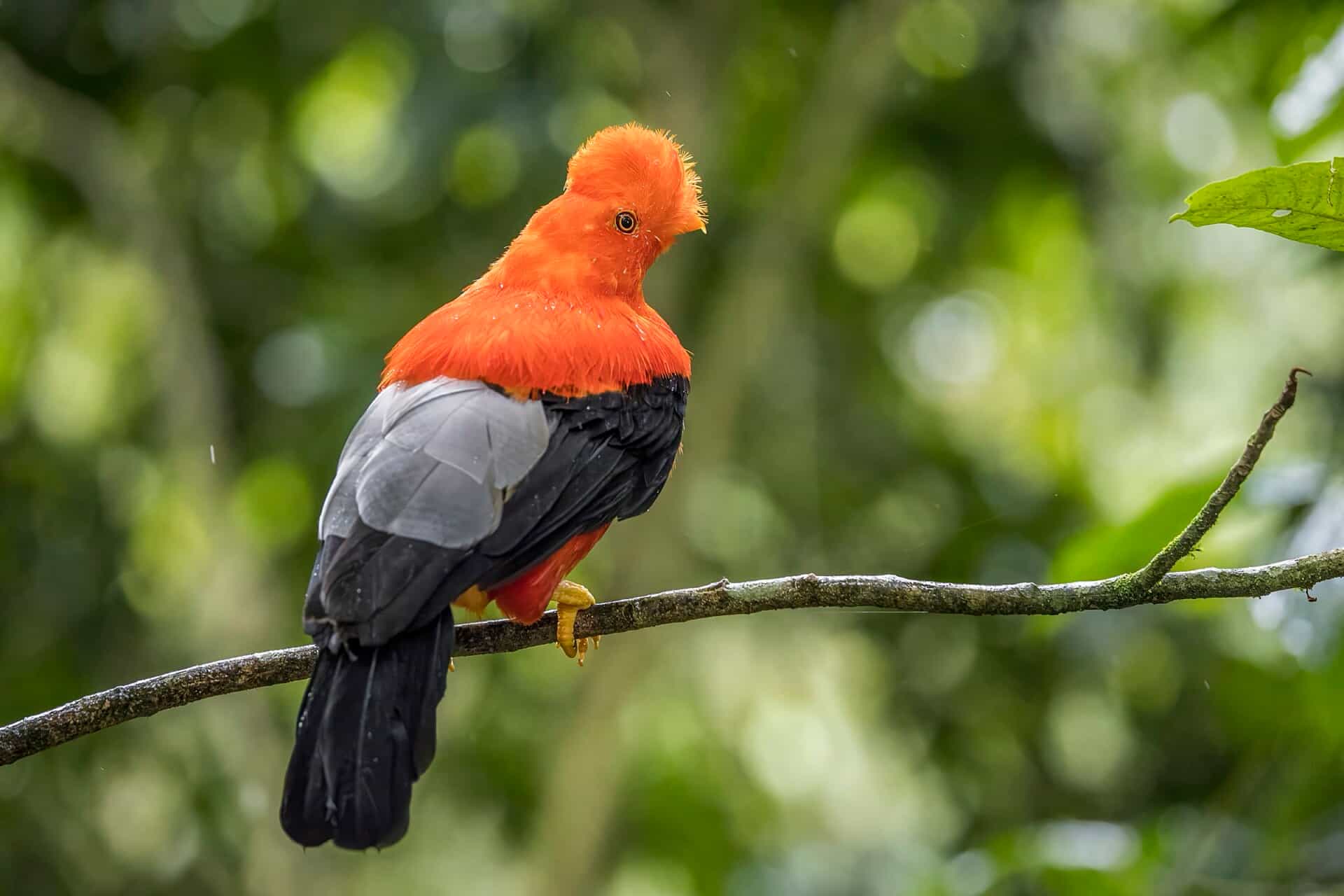
Jardín, Antioquia is one of Colombia's premier birding destinations, famous for the bright orange-red Andean Cock-of-the-Rock (Gallito de Roca), which displays at a dedicated reserve a short walk from the main square at dawn and dusk. Come at first light, bring binoculars, and expect tanagers, motmots, and hummingbirds in the surrounding cloud forest.
Why is Jardín such a good place to go birdwatching?
Jardín sits in the southwest of Antioquia where Andean cloud forest, coffee farms, and fast mountain rivers meet — a mix that packs an extraordinary number of bird species into a small, walkable area. Birders regularly log dozens of species in a single morning without straying far from town, which is exactly why Jardín has become a fixture on Colombia's birding circuit.
Colombia is the most bird-rich country on Earth, and Antioquia's cloud forests are part of why. The altitude around Jardín (roughly 1,750 meters) creates a humid, misty habitat that suits tanagers, hummingbirds, and shy understory species — many of them range-restricted to the Colombian Andes.
From our house at KM 3 Vía Verdún, you're only about five minutes from the main square yet already surrounded by the forest edge where a lot of this activity happens. We wake guests with birdsong rather than alarms, and that's no exaggeration — the dawn chorus here is the real thing.
What is the Andean Cock-of-the-Rock and where do I see it?
The Andean Cock-of-the-Rock (Gallito de Roca) is Jardín's star bird: the male is a vivid orange-red with a fan-shaped crest, almost impossibly bright against the green forest. You see it at a small dedicated reserve just on the edge of town, a short walk or quick ride from the main square, where the males gather at a 'lek' to display and call.
Timing is everything. The display is most reliable at dawn (roughly 6:00–7:30 a.m.) and again at dusk (around 5:00–6:00 p.m.), when the males are loudest and most active. Arrive before the action starts so you're settled and quiet. There's usually a small entry fee — keep some cash on hand, as amounts can change.
Because the lek is right by town, this is one of the easiest places in the world to see a species that elsewhere demands serious hiking. Even non-birders leave impressed.
Which birds can I see and when is the best time?
Beyond the Cock-of-the-Rock, Jardín delivers a steady parade of color: multiple tanager species, motmots with their racket-tipped tails, toucans and toucanets, and clouds of hummingbirds at feeders and flowering trees. The single best window is the first two to three hours after sunrise, when birds feed most actively.
Here's a quick reference for where and when to look:
| Bird | Where to see it | Best time |
|---|---|---|
| Andean Cock-of-the-Rock (Gallito de Roca) | Dedicated lek reserve at the edge of town | Dawn (~6:00–7:30 a.m.) & dusk (~5:00–6:00 p.m.) |
| Tanagers (tángaras, multiple species) | Forest edges, coffee farms, fruiting trees | Early to mid-morning |
| Hummingbirds (colibríes) | Garden feeders & flowering shrubs (incl. around our house) | All day, busiest at dawn |
| Motmots (barranqueros) | Shaded forest edges and trails | Early morning, calm hours |
| Toucans & toucanets (tucanes/tucanetas) | Canopy of fruiting trees | Morning |
What other birding spots are near Jardín?
The Cock-of-the-Rock reserve is the headline, but the area rewards anyone willing to wander a little. The cloud-forest trails and coffee-farm edges around Jardín are productive almost anywhere you walk slowly and look up. Quiet country roads heading out of town are excellent for tanagers and raptors in the early light.
Hummingbird gardens and small private reserves dotted around the municipality keep feeders stocked, so you can watch a dozen species jostle for sugar water within arm's reach. Combining a coffee-farm visit with birding is a relaxed way to spend a morning — and Jardín's coffee trails are a draw in their own right.
If you want to go deeper, ask us — we help guests arrange guided outings with local birders who know exactly which trail is producing that week. A good guide turns a nice walk into 40-plus species and ears that pick out the calls you'd otherwise miss.
What should I bring for birding in Jardín?
Pack light but smart. The single most important item is a pair of binoculars — even modest ones transform the experience. After that, it's about being ready for an early, cool, sometimes-damp cloud-forest morning.
- Binoculars — the essential tool; 8x42 is a great all-rounder.
- An early start — be in position before sunrise for the best activity.
- Light rain jacket and layers — cloud forest is cool and can drizzle.
- Sturdy, quiet walking shoes for trails that can be muddy.
- Cash in pesos for small reserve entry fees.
- Water, and a thermos of Jardín coffee for the dawn wait.
- A bird app or field guide — Merlin and eBird work offline if you download the region first.
How does staying at Isla de Pascua help with birding?
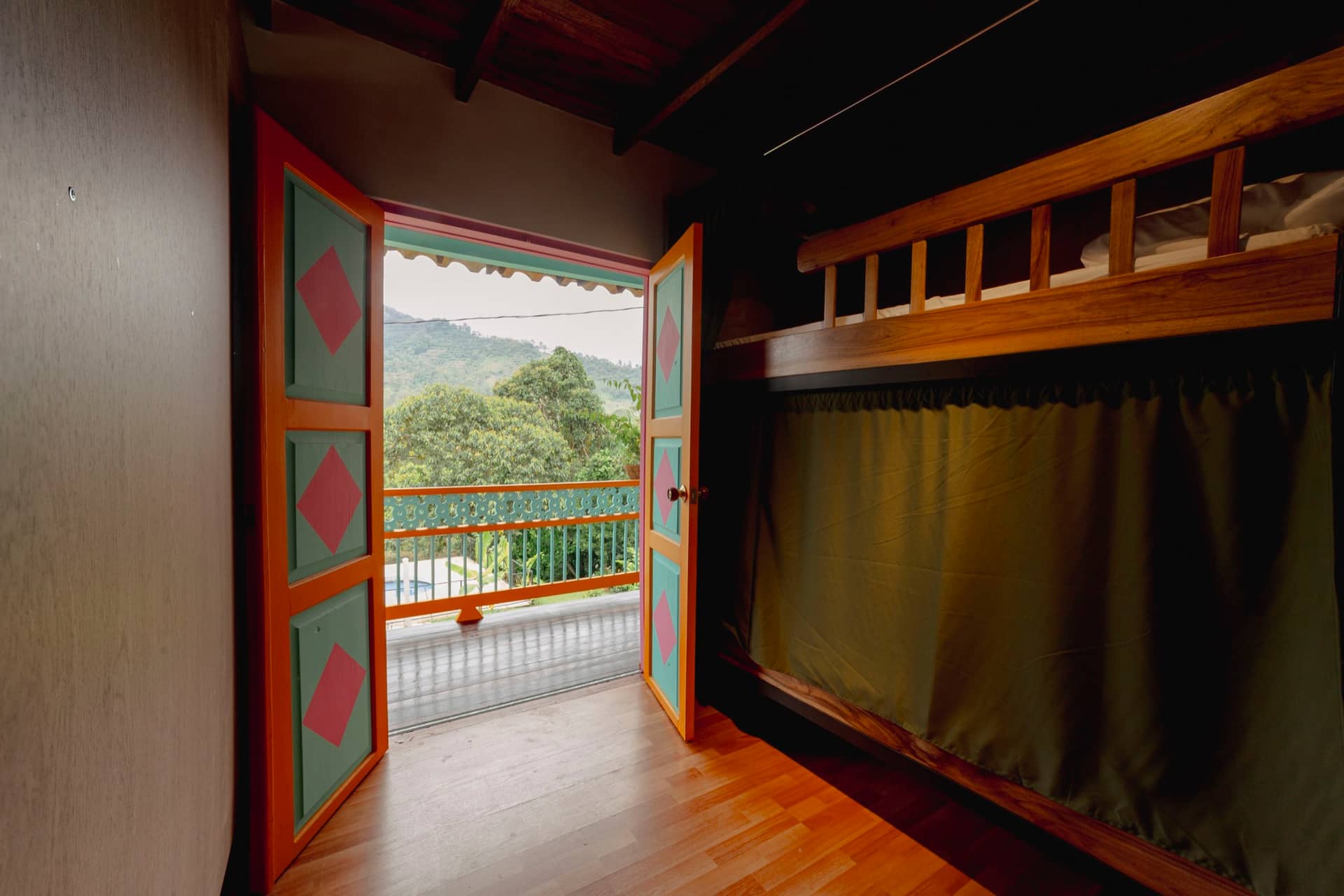
We're built for early starts. Isla de Pascua is an adults-only hostel and gathering house at KM 3 Vía Verdún, about five minutes from the main square, with smart-lock 24/7 access — so heading out before dawn and slipping back in after never means waking anyone or waiting on a front desk.
Our setting at the forest edge means hummingbirds and tanagers are often the first thing you notice over morning coffee by the pool with its mountain views. We host birdwatching at dawn as one of our regular experiences, alongside coffee trails, and we can connect you with trusted local guides for a deeper outing.
Practical things matter too: free on-site parking, fast WiFi (50+ Mbps) for uploading your eBird lists, a shared kitchen for a pre-dawn snack, and a paved road any vehicle can manage. Choose a private room or a bed in a shared dorm depending on your trip.
Frequently asked questions
What is the best time of day to see the Cock-of-the-Rock in Jardín?
Dawn (around 6:00–7:30 a.m.) and dusk (around 5:00–6:00 p.m.), when the males are most active at the lek. Arrive a little early and stay quiet so you don't disturb the display.
Do I need a guide to go birdwatching in Jardín?
Not for the Cock-of-the-Rock reserve, which is easy to reach on your own. But for the cloud-forest trails a local guide hugely increases what you see and hear. We can arrange guided outings for guests — just ask us on WhatsApp.
How much does it cost to visit the Cock-of-the-Rock reserve?
There's usually a small entry fee, payable in cash. Amounts can change, so bring some pesos and confirm locally. We're happy to point you to current details over WhatsApp before you head out.
What other birds will I see besides the Cock-of-the-Rock?
Expect several tanager species, motmots, toucans and toucanets, and many hummingbirds at feeders and flowering trees — especially in the first hours after sunrise.
How far is the birding from Isla de Pascua Hostel?
We're at KM 3 Vía Verdún, about five minutes from the main square, and the Cock-of-the-Rock reserve is a short walk or ride from there. Our forest-edge setting means hummingbirds and tanagers are often right outside.
How do I get to Jardín for a birding trip?
Take a bus from Medellín's Terminal del Sur to Jardín — roughly 3.5 to 4 hours, with several departures daily. The road is paved, so any vehicle can make the trip if you prefer to drive.
Stay at Isla de Pascua
A 16-bed mixed dorm, a private room for up to 4 and a shared kitchen in Jardín.
Want to wake up to birdsong and reach the Cock-of-the-Rock lek before sunrise? Message us on WhatsApp at +57 322 599 4345 to book your room and we'll help plan your dawn birding outing.
Create travel content? Collab with us →